
On this page
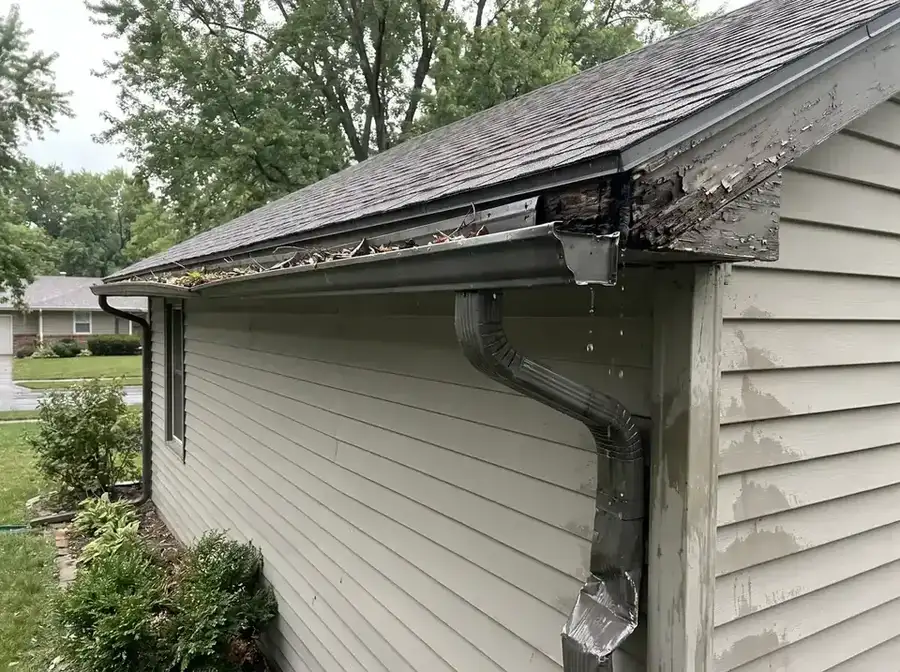
- Why does the wood behind the gutter rot?
- What causes it?
- How is fascia repaired?
- Which signs should I look for?
- Which materials are used for fascia?
- Historic houses
- How far can rot spread?
- Steps to stop it coming back
- A quick check you can do from the ground
- Pests at the eave
- What affects the price of fascia repair?
Why does the wood behind the gutter rot?
Fascia rots when water reaches it again and again without drying. Redding Brothers Gutters connects callers with independent local gutter contractors, who give the estimates and do the work. Macon's summers are hot and humid, with a July mean of 81.8°F in the climate record, and warm, damp wood is exactly what rot fungi need. Insects such as termites and carpenter bees follow soft wood.
What causes it?
| Cause | How it wets the wood |
|---|---|
| Leaking corner or end cap | Drips onto the board every storm |
| Overflow | Pours over the front and down the fascia |
| No drip edge | Water runs behind the gutter |
| Debris dam | Holds water against the wood |
| Sagging gutter | Standing water spills behind |
How is fascia repaired?
- Take the gutter down on the affected run.
- Probe the wood to find where rot ends.
- Cut out bad sections back to sound wood.
- Check the rafter tails behind.
- Fit new primed board and paint or wrap it.
- Add drip edge if missing.
- Re-hang the gutter on hidden hangers.
Which signs should I look for?
- Peeling or blistered paint on the board.
- Dark staining below corners and outlets.
- Gutters that pull away or will not tighten.
- Soffit panels that sag or show water marks.
- Insects, birds or squirrels entering at the eave.
Which materials are used for fascia?
| Material | Strengths | Notes |
|---|---|---|
| Primed wood board | Matches originals; paints well | Must be painted and kept dry |
| Engineered wood | Straight, stable | Paint the cut ends |
| PVC or composite | Does not rot | Expands with heat; fix as directed |
| Aluminum wrap | Low upkeep | Only over sound, dry wood |
Historic houses
Macon's historic districts include many houses with molded cornices and built-in gutters. Rot there often runs further than it looks, and the repair should match the original profile. Ask the contractor whether they repair period trim or work with a carpenter who does. See gutters for Macon's historic homes.
How far can rot spread?
Rot often goes further than it looks. A soft patch under a corner can extend along the board and into the rafter tails. A careful contractor probes well past the visible damage and quotes fascia per foot so extra found during work is clear.
Steps to stop it coming back
- Fix the gutter leak that caused it.
- Add drip edge so roof water reaches the gutter.
- Seal and paint all cut ends of new board.
- Re-hang the gutter with hidden hangers into sound wood.
- Clean gutters regularly under pines.
A quick check you can do from the ground
- Look for peeling paint at corners and outlets.
- Look for dark streaks below the gutter.
- Look for gaps between gutter and board.
- Look at the soffit for stains or sagging.
- Watch in a storm for water behind the gutter.
- Watch for carpenter bees and wasps around the eave.
Pests at the eave
Soft fascia and gaps at the soffit let in wasps, carpenter bees, squirrels and birds. Fixing the wood and closing gaps when gutters are replaced keeps them out. Carpenter bee holes in exposed wood are a sign the paint has failed and the wood needs attention.
What affects the price of fascia repair?
| Factor | Effect |
|---|---|
| Feet of board replaced | The base cost |
| Rafter-tail repair | Adds carpentry time |
| Height and pitch | Access time |
| Paint or wrap | Finish cost |
| Gutter removal and re-hang | Labor |
| Molded or historic profiles | Custom millwork |