
On this page
- What are screens and reverse-curve guards?
- How do they compare?
- Which trees do they suit?
- How do they handle Macon conditions?
- Reverse-curve guards in detail
- Screens in detail
- How are they fitted?
- When should I choose micro-mesh instead?
- What to ask before buying a branded system
- When screens make sense
- Myths about cheap guards
- What about sweetgum balls and acorns?
- Replacing failed screens
- What affects the price
What are screens and reverse-curve guards?
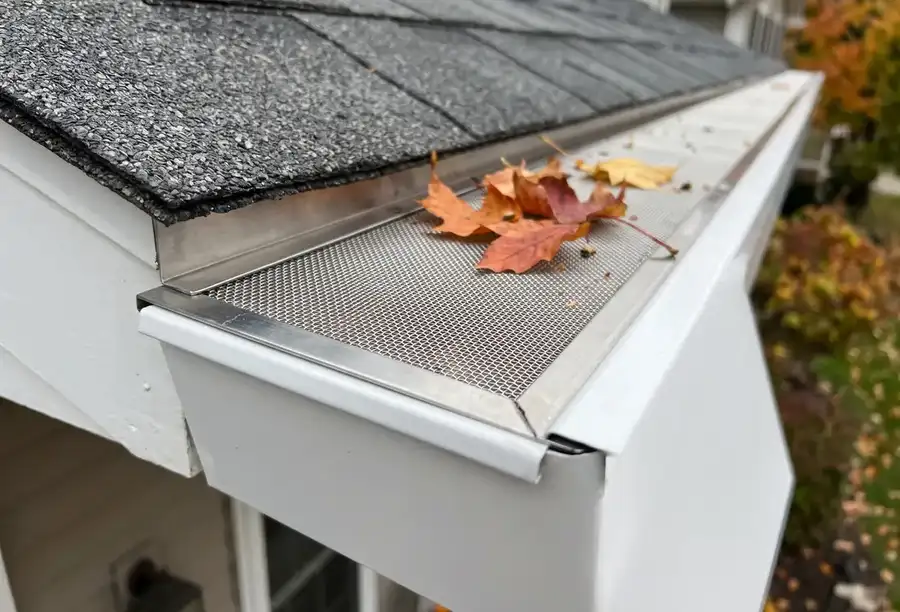
Screens are coarse covers laid over the gutter. Reverse-curve guards are solid hoods that rely on water clinging to a curved edge. Redding Brothers Gutters connects callers with independent local gutter contractors, who give the estimates and do the work.
How do they compare?
| Type | How it works | Suits | Problems |
|---|---|---|---|
| Plastic screen | Coarse mesh | Big leaves; low budget | Needles; sun damage; lifts |
| Perforated aluminum | Sheet with holes | Leaves | Needles lodge; pollen clogs |
| Reverse-curve hood | Water curls around the nose | Leaves on low-pitch roofs | Overflow in storms |
Which trees do they suit?
| Tree | Screen | Reverse-curve |
|---|---|---|
| Pines | Poor | Poor |
| Water oak, willow oak | Fair; acorns lodge | Good |
| Sweetgum | Fair; seed balls lodge | Good |
| Maple | Good | Good |
| Yoshino cherry | Petals pass through | Good |
How do they handle Macon conditions?
| Condition | Screen | Reverse-curve | Micro-mesh |
|---|---|---|---|
| Heavy fall leaf drop | Fair | Good | Good |
| Pine needles | Poor | Poor | Good |
| Spring pollen | Clogs | Coats the nose | Rinse off |
| Summer downpour | Good intake | May overshoot | Good intake |
| Strong wind | May lift | Usually stays | Best if screwed |
Reverse-curve guards in detail
Water follows the curve of the hood and drops through a slot into the gutter; leaves are meant to slide off. These work best on lower-pitch roofs and with broad leaves. On steep roofs, in heavy rain or at valleys, water can shoot past the nose, and pine needles collect in the slot.
Screens in detail
| Screen type | Notes |
|---|---|
| Snap-in plastic | Cheap; brittle in sun; lifts in wind |
| Expanded aluminum | Stiffer; holes large enough for needles |
| Perforated aluminum | Better; holes clog with grit and pollen |
| Hinged screens | Flip up for cleaning |
How are they fitted?
- Clean the gutters.
- Check pitch and hangers.
- Lay or fix sections: screens snapped or screwed, hoods under the shingles or onto the fascia.
- Seal corners.
- Test.
When should I choose micro-mesh instead?
Under pines, on two-story houses where cleaning is a big job, and anywhere wind could lift clipped-on screens. See micro-mesh gutter guards.
What to ask before buying a branded system
- Which trees does it handle? Ask specifically about pines.
- How is it fixed: screws, clips or under the shingles?
- What does the warranty cover?
- Does the warranty transfer with the house?
- Who services it, and at what cost?
When screens make sense
A one-story house under maples or oaks, with no pines nearby and a modest budget, can do well with a screwed-down aluminum screen. Cheap plastic screens that clip in rarely last long in Georgia sun.
Myths about cheap guards
| Myth | Reality |
|---|---|
| Any guard keeps needles out | Only fine mesh does |
| Foam inserts are maintenance-free | They clog and hold water |
| Hoods never overflow | They can in summer downpours |
What about sweetgum balls and acorns?
Sweetgum seed balls and acorns are round and hard. They roll off smooth hoods well but lodge in the openings of coarse screens and perforated covers, where they trap needles behind them. Under sweetgums and oaks, a smooth hood or micro-mesh works better than a screen.
Replacing failed screens
Clip-in plastic screens often fail within a few seasons in Georgia sun. When they do, the gutters underneath can usually take micro-mesh, once they have been cleaned and checked. Ask the contractor to remove the old screens and dispose of them.
What affects the price
Screens are the cheapest guards; reverse-curve systems cost more and are often sold as branded systems with warranties. Feet, stories, corners and valleys set the rest.